

A Beginner's Guide to Kirtan Chanting
What Is Kirtan? (It’s Not a Singing Contest)
There's a reason we instinctively sing along to a favorite song; sound has a unique power to quiet the mind and open the heart. Kirtan is a practice that channels this simple joy into a shared meditative experience. Think of it less as a performance and more as a spiritual sing-along, where the goal isn’t perfection, but connection.
Let’s get the biggest fear out of the way: you do not need to be a "good singer." In fact, it’s almost better if you’re not. Kirtan isn’t about hitting the right notes. It’s about adding your unique voice to a collective sound, creating a wave of vibration that’s much bigger than any single person. Your voice, whether it’s pitch-perfect or a little wobbly, is a welcome part of the chorus.
This beautiful practice has its roots in Bhakti yoga from India, which is the yoga of devotion. But this isn't about devotion to a specific deity or doctrine. It’s about devotion to the heart, to love, and to the shared human experience. It’s a deeply spiritual practice that remains open and welcoming to all paths, which is a core part of the ethos we cherish.
Imagine a cozy room filled with the warm, breathy tones of a harmonium and the steady, grounding rhythm of drums. The leader sings a simple line, and the group sings it back. This is the heart of kirtan for beginners. It’s an invitation to simply be, to breathe, and to let the sound wash over you.
How to Participate in Your First Kirtan
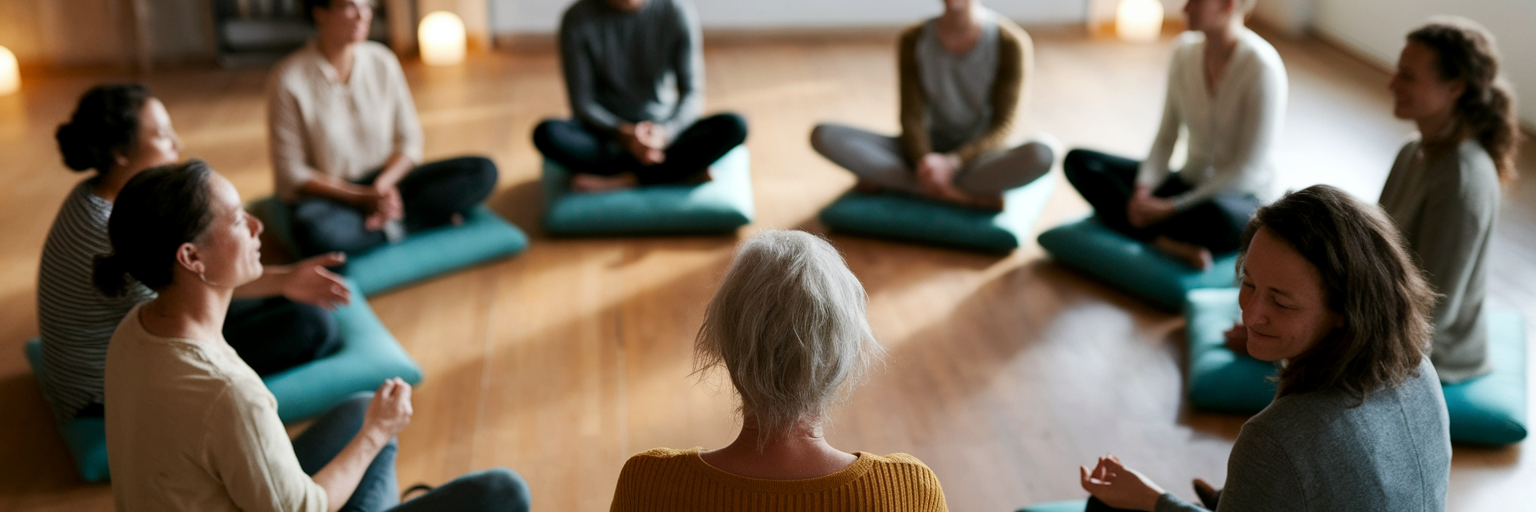
Walking into your first kirtan can feel a little like the first day of school. You might wonder where to sit, what to do, and if everyone else knows a secret handshake. Relax. There’s no secret handshake, and there’s absolutely no wrong way to participate. Here’s a gentle guide on how to start chanting.
- Find a comfy spot and just listen. Seriously, that’s it. Your only job at first is to get comfortable and let the sounds fill the space. You don’t have to do anything. Many people spend their entire first kirtan just soaking in the vibrations, and it’s a beautiful way to experience it.
- Notice the call-and-response pattern. Kirtan is built on a simple structure. The leader sings a short, repetitive phrase (a mantra), and then the group sings it back. You’ll quickly pick up the rhythm and melody. There’s no sheet music to read or complex lyrics to memorize. The repetition is designed to be meditative and easy to follow.
- Hum along when you’re ready (or don’t!). If you feel the urge, you can start by humming quietly. When a phrase feels familiar, you might try singing it. Or you might remain silent the whole time. All are perfect. The energy of the group holds you, whether your voice is part of it or not.
You can often find kirtan events at local yoga studios, wellness centers, or spiritual shops. A quick search for "kirtan near me" might surprise you. For an even lower-pressure entry point, many online kirtans allow you to join from the comfort of your living room, pajamas and all.
If even silent participation in a group feels like too much at first, you can always begin with a more personal practice. Exploring individual meditation techniques can be a wonderful way to build comfort with stillness and silence on your own terms.
The Unique Energy of Chanting Together
While chanting alone can be a deeply grounding practice, there is a special kind of magic that happens in a group. It’s the difference between lighting a single candle and standing in a room full of them. The collective light and warmth are palpable. This is the power of group chanting meditation.
When you join a kirtan, you become part of a wave of sound. Individual voices, with all their unique textures and tones, merge into one harmonious current. It’s an experience that bypasses the thinking mind and speaks directly to the heart. In a world where we can feel so disconnected, this shared vulnerability creates a profound sense of belonging. For an hour, you are simply one voice among many, breathing and singing together.
As spiritual platforms like Wanderlust have noted, the shared vibration of kirtan can create a powerful transformative experience. The sound itself becomes a vehicle for connection. This is why exploring different forms of music for meditation can be so enriching; it taps into this universal language of sound.
Solo chanting and group kirtan are not mutually exclusive. They are two wonderful tools for your well-being toolkit, each serving a different, yet equally valuable, spiritual need.
| Factor | Group Kirtan | Solo Chanting |
|---|---|---|
| Primary Goal | Shared connection and collective joy | Personal grounding and introspection |
| Energetic Feel | Expansive, powerful, and uplifting | Intimate, focused, and calming |
| Key Benefit | Fosters community and combats loneliness | Builds a personal, daily spiritual habit |
| Best For | When you seek connection and shared energy | When you need quiet time for self-reflection |
This table highlights how both practices serve different, yet equally valuable, spiritual needs. They are not mutually exclusive but rather two wonderful tools for your well-being toolkit.
Simple Mantras to Get You Started

A mantra is simply a sacred sound or phrase designed to focus the mind and open the heart. It’s a tool to give your busy brain something to do so the rest of you can relax. Here are a few simple kirtan mantras you might encounter, explained in a way that feels easy and accessible.
The Universal Sound: Om (Aum)
Meaning: Om is considered the primordial sound of the universe, representing the vibration of all creation. It’s the sound that contains all other sounds.
Pronunciation: It’s chanted as a long, resonant "Aaa-Uuu-Mmm."
How to Chant It: As you chant, feel the "Aaa" sound vibrating in your belly, the "Uuu" in your chest, and the "Mmm" humming in your head. It’s like a mini internal massage.
The Cycle of Life: Saa Taa Naa Maa
Meaning: This mantra represents the continuous cycle of life: birth, life, death, and rebirth. It’s a beautiful reminder of the flow of existence.
Pronunciation: SAH - TAH - NAH - MAH.
How to Chant It: Chant it in a steady, rhythmic tone. You can even tap your fingers to your thumb with each syllable to help focus your mind. It’s wonderfully soothing for an anxious spirit.
A Chant for Compassion: Lokah Samastah Sukhino Bhavantu
Meaning: "May all beings everywhere be happy and free, and may the thoughts, words, and actions of my own life contribute in some way to that happiness and to that freedom for all." It’s a powerful chant of loving-kindness.
Pronunciation: LO-kah SAH-mas-tah SOO-kee-no bha-VAN-too.
How to Chant It: As you sing this mantra, imagine sending out waves of peace and goodwill from your heart to the entire world. It’s a beautiful way to shift your focus from your own worries to a feeling of expansive love. These mantras are powerful tools for balancing your energy, a concept you can explore further in our chakra meditation course.
Lasting Calm and Joy in Your Daily Life
The beautiful thing about kirtan is that its effects don’t stop when the music ends. The benefits of kirtan ripple out into your daily life in subtle but profound ways. Giving your "thinking mind" a much-needed break during chanting often leads to more clarity and focus when you return to your work or daily tasks.
You might notice an emotional "afterglow" of joy and compassion that softens your interactions with others. That stressful commute or long line at the grocery store might not seem so bothersome. This practice also offers a physical release. The conscious breathing involved in chanting can help dissolve tension you didn't even realize you were holding in your shoulders and jaw.
Ultimately, kirtan is a joyful and deeply human practice of self-connection. It’s a reminder that you have a powerful tool for finding peace right inside you: your own breath and voice. If you're inspired to bring more of this calm into your life, our collection of guided meditation journeys can be a wonderful place to continue your exploration.


%0AThere's%20a%20reason%20we%20instinctively%20sing%20along%20to%20a%20favorite%20song;%20sound%20has%20a%20unique%20power%20to%20quiet%20the%20mind%20and%20open%20the%20heart.%20Kirtan%20is%20a%20practice%20tha...)