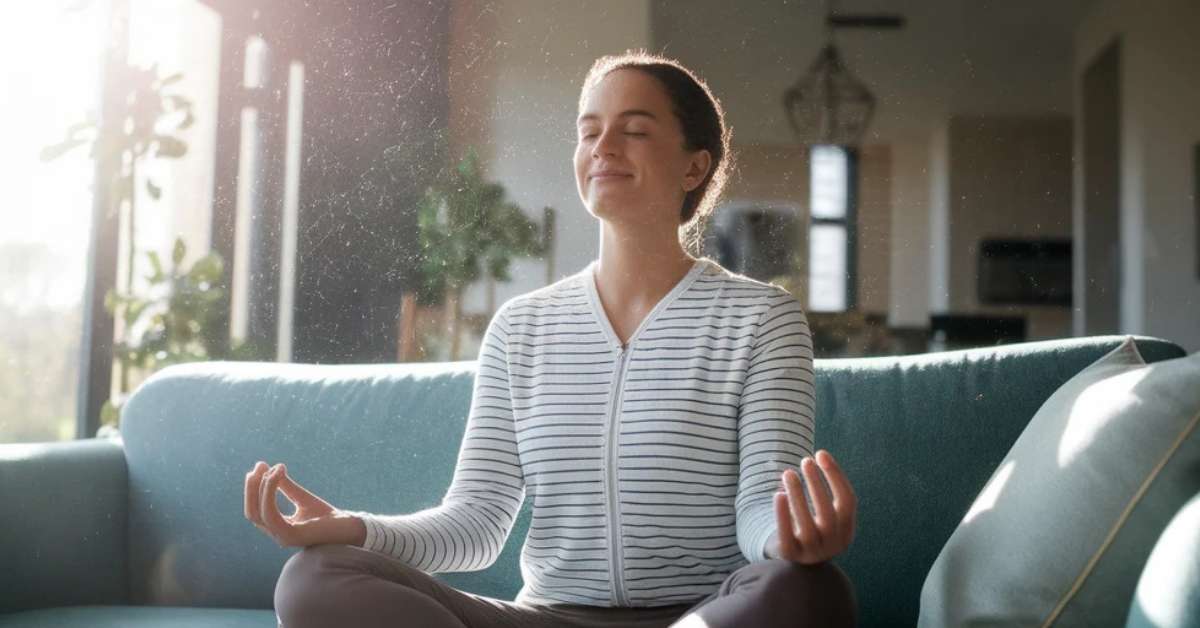
Five Simple Meditation Practices for a Sharper Focus
Why Your Brain Feels Like a Browser with Too Many Tabs Open
Does your mind ever feel like a web browser with 57 tabs open, all playing different sounds? One tab is your to-do list, another is replaying a conversation from yesterday, and a few more are just playing cat videos for no reason. This mental clutter is a huge reason why productivity can feel like an uphill battle. We get pulled in a dozen directions at once, and our focus shatters.
Many people think meditation for focus and productivity is about forcing your mind to go completely blank. Let’s gently toss that idea out the window. It’s not a mystical quest for emptiness. Think of it more like a workout for your attention span. The goal isn’t to silence your thoughts, but to learn how to choose which ones get the spotlight. This is the secret to a powerful meditation to reduce distraction and get things done with a sense of calm.
Technique 1: Focused Attention, Your Mental Flashlight

Imagine your awareness is a flashlight. Focused Attention meditation is the simple practice of pointing that beam of light onto one single thing. For most, the easiest starting point is the breath. It’s always with you, and it’s a wonderfully boring anchor, which is exactly what you want.
Here’s how to try it:
- Find a comfortable seat, you don’t need to be a pretzel.
- Gently close your eyes and just notice the sensation of your breath. The air moving in and out.
- When your mind wanders off to plan dinner or worry about an email, and it will, that’s part of the fun. Just gently guide it back to your breath.
That moment of noticing you’re distracted and kindly returning is the actual exercise. It’s like a bicep curl for your brain. This practice directly trains you on how to improve concentration. As research from Harvard Health has found, even short daily mindfulness sessions can lead to improvements in attention and memory.
Technique 2: Open Monitoring, Cloud-Watching for Your Thoughts
If Focused Attention is a flashlight, Open Monitoring is the vast, open sky. Instead of zeroing in on one thing, you broaden your awareness to notice whatever drifts through your mind. Imagine lying in a field, watching clouds pass by. The clouds are your thoughts, feelings, and sensations. You just observe them without getting carried away by any particular one.
This practice cultivates a "bigger picture" awareness of your own mental habits. You start to see your recurring worries or anxieties as just passing weather patterns, not urgent truths. This is one of the most effective mindfulness techniques for work, as it helps you become less reactive to stressful thoughts about deadlines. This practice of observing your inner world is foundational to understanding your personal energy centers, which you can explore further through practices related to the seven chakras and their colors.
| Aspect | Focused Attention (The Flashlight) | Open Monitoring (The Sky) |
|---|---|---|
| Primary Goal | Train sustained concentration | Cultivate non-reactive awareness |
| Your Attention Is... | Narrow and directed to one point | Broad, open, and receptive |
| How You Treat Thoughts | Gently guide attention away from them | Observe them as they pass without judgment |
| Best For... | Pre-work warm-up to sharpen focus | De-stressing and understanding mental patterns |
This table clarifies two fundamental approaches to meditation. One builds your focus muscle directly, while the other helps you detach from the mental noise that disrupts it.
Technique 3: The 'Noting' Game to Tame Your Inner Chatter

For those whose minds feel particularly busy, this technique can feel like a playful game. "Noting" is the simple practice of gently placing a mental label on whatever is pulling your attention away. If you find yourself worrying about a future presentation, you can silently say to yourself, "worrying" or "planning." If a sound distracts you, just note "hearing."
The tone here is key. It’s not about scolding yourself. It’s about acknowledging the distraction with a light, curious touch. This simple act of labeling creates a tiny bit of space between you and the thought, which magically drains its power. It stops you from getting swept away down a rabbit hole of anxiety. By noting your common distraction patterns, you can quickly and kindly return to your task. This active labeling is a form of engaged mindfulness, similar to how some of our tapping meditations use physical sensation to anchor your focus.
Technique 4: Mindful Walking for Those Who Can't Sit Still
Does the idea of sitting still make you want to run for the hills? Perfect, then this one's for you. Mindful walking turns a simple, everyday activity into a grounding meditation. You don’t need a special path or a quiet forest, though those are lovely. You can do this walking to the coffee machine or even just around your living room.
The instruction is simple: bring your full attention to the physical sensations of walking. Feel the soles of your feet connecting with the ground. Notice the rhythm of your steps and the gentle swing of your arms. When your mind wanders, just bring it back to the feeling of your body moving. This is a wonderfully practical way to clear your head between tasks and get out of your thoughts and into your body. Just as you can turn a walk into a meditation, you can also transform your daily routine with practices like a shower meditation, using the sensations of water to ground you.
Technique 5: Space Time Bridging for Laser-Like Focus

This is a modern, science-backed meditation that feels a bit like a secret superpower for your eyes and mind. This powerful exercise, known as Space Time Bridging, was shared by Andrew Huberman, a professor of neurology and ophthalmology at Stanford, as a way to rapidly enhance focus. It directly engages the brain circuits responsible for shifting your visual and mental attention.
Here’s how it works:
- For about 10 to 30 seconds, relax your eyes and focus your gaze on a single point far away, like a tree outside your window.
- Then, for another 10 to 30 seconds, shift your gaze to an object up close, like a spot on your keyboard or your own thumb.
- Repeat this back-and-forth shift for a minute or two.
It’s a fantastic warm-up to perform right before a period of intense work, helping you lock into your task faster and sustain your concentration.
Making Meditation a Habit Without It Feeling Like a Chore
Starting a new practice can feel daunting, so let’s make this an easy meditation for beginners. The goal is consistency, not perfection. Here are a few gentle tips to get you started:
- Start ridiculously small. Seriously. Three minutes a day is far more powerful than 30 minutes once a month. You can always add more time later. The goal is to build the habit, not win a medal.
- Try 'habit stacking.' Link your new meditation practice to something you already do every day. Try it for three minutes right after your morning coffee, or just before you close your laptop for the day.
- Let go of 'doing it right.' Your mind will wander. That’s what minds do. It is not a sign of failure. The practice is simply about the gentle act of returning, again and again, with kindness.
- Find a 'good enough' spot. You don’t need a perfect, silent sanctuary with incense burning. A quiet corner in your office, your parked car, or even the bathroom stall for two minutes works just fine.
If you'd like a little more support as you begin, exploring some of our guided meditation journeys can provide the structure and gentle guidance to help you build a consistent practice.
Your Brain's New Superpower
Think of these five techniques as a versatile mental toolkit. You don’t have to master them all. Experiment and see what feels right for you. Maybe you need the flashlight of Focused Attention before a big project, or the open sky of Open Monitoring to de-stress after a long day. The power is in having choices.
With a little practice, you’ll notice a shift. You’ll find it easier to stay on task, you’ll be less rattled by stress, and you’ll cultivate a more peaceful and productive relationship with your work and your mind. The real superpower isn't achieving a perfect, silent mind. It's the patience and kindness you show yourself each time you sit down to practice. As you continue on this path, remember that there are always more ways to feed your spirit and cultivate inner peace. It's a journey of focus, one gentle breath at a time.