
How a Simple Mantra Can Transform Your Meditation
What Exactly Is a Mantra Anyway?
Let’s clear the air a bit. The word "mantra" can sound a little mysterious, like a secret code you need a special key to understand. But in reality, it’s one of the most wonderfully practical tools for the mind. A mantra is simply a word, sound, or phrase you repeat to help with concentration. Think of your mind as a playful, energetic puppy that wants to chase every thought that flits by. Giving it a mantra is like giving that puppy a favorite chew toy. It gives the mind a simple, soothing job to do.
This is the core principle behind how to use mantras in meditation. Instead of fighting with your thoughts or trying to force them away, you gently offer your attention something else to focus on. It’s a simple redirection. Many find that the sound itself has a calming quality. You don’t need to understand the physics of it; just notice how humming a simple tune can soothe your nervous system. A mantra works in a similar way, creating a subtle vibration that can feel deeply grounding.
The real beauty of a mantra isn’t in its secret meaning but in its repetition. It becomes a familiar anchor in the sea of your thoughts. Each time your mind wanders off to plan dinner or replay a conversation, you can gently guide it back to the sound of your mantra. It’s a home base, always there, waiting patiently. This simple act of returning, again and again, is the practice. It’s a gentle training in presence, and it’s one of many tools you can explore in the different meditation practices we've outlined.
A Tour of Mantra Styles (No Passport Required)
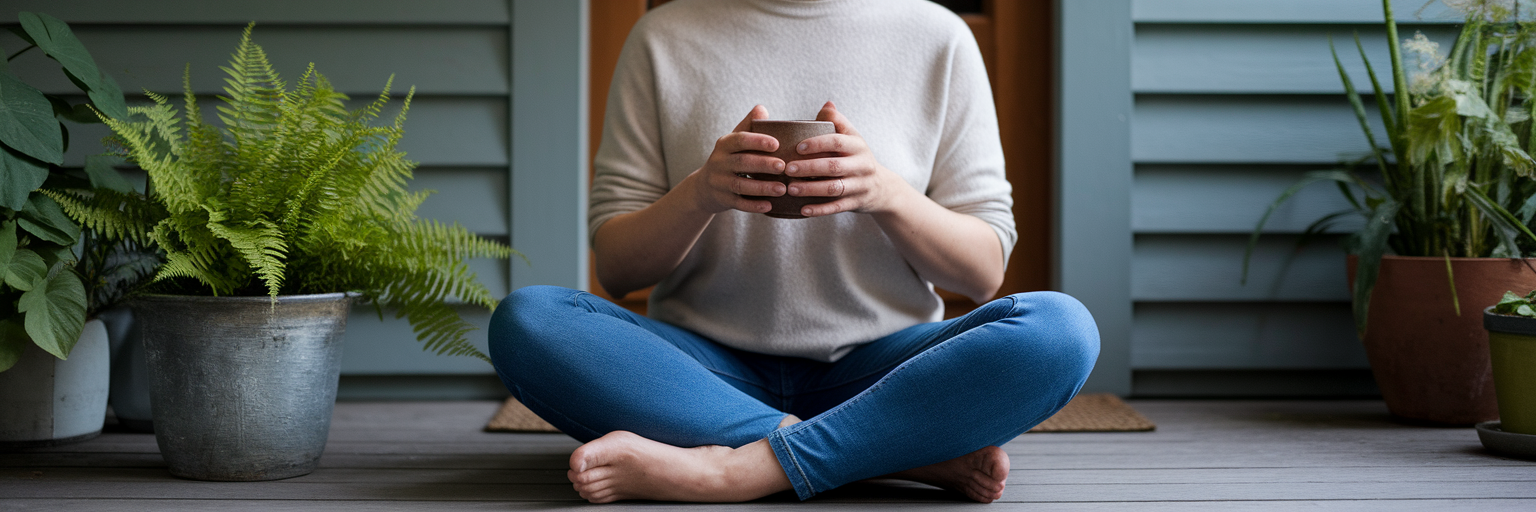
Mantras come in all sorts of wonderful flavors, and the best part is finding one that suits your personal taste. There’s no right or wrong choice, only what feels good to you. Think of it like browsing a menu and picking what you’re in the mood for today.
Some of the most accessible styles include:
- Affirmations: These are powerful, personal statements that help rewire your inner dialogue. They are wonderfully effective as simple mantras for anxiety because they directly counter worried thoughts. Repeating something like "I am calm and capable" or "I am enough" can feel like a warm, internal pep talk.
- Loving-Kindness Mantras: Think of these as good-vibe generators. Phrases like "May I be happy" or "May I be peaceful" are designed to cultivate compassion, first for yourself and then for others. They are like sending a gentle, heartfelt hug inward.
- Bija (Seed) Mantras: These are simple, resonant sounds like "Om" or "Ram." They don't have a complex meaning to analyze; their power is in their vibration. Like striking a single, pure note on a piano, they help center the mind and bring it to a point of stillness. These sounds are often associated with the body's energy centers, a concept we explore in our chakra meditation course.
You might also hear about traditional Sanskrit mantras, which connect to ancient spiritual energies. As detailed by resources like Japa Mala Beads, these classifications have deep roots. But don't feel pressured to choose something ancient if it doesn't resonate. The most powerful mantra is the one that feels like a friend.
| Mantra Style | Core Purpose | Feels Like... | Example |
|---|---|---|---|
| Affirmation | Rewiring self-talk | A personal pep talk | 'I am capable and calm.' |
| Loving-Kindness | Cultivating compassion | Sending a warm hug | 'May I be peaceful.' |
| Bija (Seed) Mantra | Centering the mind | A resonant hum | 'Om' or 'Ram' |
| Traditional Sanskrit | Connecting to ancient energy | Tuning into a specific frequency | 'Om Namah Shivaya' |
This table offers a starting point. The best mantra is the one that feels most natural and comforting to you, regardless of its category.
Finding the Mantra That Clicks for You
So, how do you find the one? This part of the journey is all about you. Start by asking yourself a gentle question: "What do I need a little more of in my life right now?" Is it calm? Confidence? Self-compassion? Answering this is the first step in choosing a mantra for focus or any other personal goal. Your intention will guide you to the right words.
Next, adopt a "try-on" approach. You wouldn't buy a pair of shoes without walking around in them for a minute, right? It’s the same with a mantra. Pick one or two that feel promising and live with them for a few days. Repeat them during your meditation, while you’re washing dishes, or on a walk. There’s no pressure to commit.
And please, let go of the idea that a mantra has to be in a language you don’t understand. A simple phrase in plain English that speaks directly to your heart is infinitely more powerful than a Sanskrit word that feels foreign and clunky on your tongue. The power of personalization is immense, a theme we touch on in our article about custom manifestation. The ultimate "click test" is this: when you repeat it, does it feel like a comforting hum in the background of your mind, or does it feel like a chore? The right one will feel like coming home.
Your Step-by-Step Guide to Mantra Meditation

If you're new to this, here is a simple roadmap for a mantra meditation for beginners. Remember to be gentle with yourself. This is a practice of kindness, not perfection.
- Find a comfortable spot. Forget the perfect meditation cushion on a mountaintop. A chair in a quiet corner of your home is wonderful. The goal is "good enough," not "perfect." Just find a place where you can sit without being disturbed for a few minutes.
- Set a gentle intention. This isn’t a rigid goal. It’s more like a small promise to yourself. You might silently say, "For the next five minutes, my only job is to be here with my breath and this phrase." That’s it. You’ve set the stage.
- Begin the practice. Start by saying your chosen mantra aloud a few times. Let the sound fill the space and feel the vibration in your chest. Then, let it soften to a whisper for a few more repetitions. Finally, allow it to become a silent thought, repeating gently in your mind at its own natural rhythm.
- Navigate the journey. Your mind will wander. It will make grocery lists, worry about emails, and wonder what’s for lunch. This is not a mistake; it’s just what minds do. When you notice your attention has drifted, offer yourself a little smile. "Ah, there it is again." Then, without any drama, lovingly guide your focus back to your mantra. It’s your anchor, always waiting patiently.
Each time you return to the mantra, you are strengthening your ability to be present. If you find you enjoy the structure of this practice and would like more support, you might enjoy one of our guided meditation journeys to help you along the way.
When Your Mind Throws a Party (and You Weren't Invited)
Let’s be honest: some days, you’ll sit down to meditate, and your mind will decide it’s the perfect time to host a loud, chaotic party. And you weren’t even on the guest list. It’s completely normal. The brain's job is to think, so the goal isn’t an empty mind but simply practicing the art of the gentle return.
If you feel bored, restless, or even a little silly repeating a phrase over and over, you’re not alone. The best way to build a sustainable daily mantra practice is to start small. Seriously small. Try for just three to five minutes. It’s better to have a short, sweet practice you do consistently than a long, frustrating one you dread.
What if you miss a day? Nothing happens. You don’t lose your progress. This is a gift you give yourself, not another rule to follow. Just begin again tomorrow. Mantra meditation is a practice, not a performance. There is no grading system. Every single time you notice your mind has wandered and you gently guide it back, you are doing it perfectly. If sitting still feels like a particular challenge, remember you can find mindfulness in motion, an idea we explore in our guide to shower meditation.