Article: Using Sound Frequencies for Inner Peace
Using Sound Frequencies for Inner Peace
The Symphony of Self-Care
Does your mind ever feel like a radio stuck between stations, filled with static and noise? We all have those days. What if you could gently turn the dial to a clear, calm frequency using nothing more than sound? This is the beautiful simplicity behind music meditation. It’s not about finding the perfect background noise to ignore, but about actively listening to sounds that can guide your inner world from chaos to calm.
It might sound a bit like science fiction, but our brains are already producing their own electrical frequencies, or brainwaves, for different states like deep sleep, focused work, or creative daydreaming. The core idea here is called brainwave entrainment, which is a fancy way of saying our brains have a natural tendency to sync up with external rhythms. Think of it like tapping your foot to a catchy song without even realizing it. Your brain does the same with sound frequencies.
Learning how to use music for meditation is a low-stakes, even fun, experiment in discovering what your nervous system loves. It’s an invitation to explore different approaches to mindfulness and find what truly resonates with you. By intentionally choosing certain sounds, you can gently encourage your mind to shift gears. This practice is less about forcing relaxation and more about creating the perfect conditions for it to unfold naturally.
Your Personal Sound Sanctuary Menu

Now that we’ve tuned into the basic idea, let’s explore the menu of sounds available. Think of this as a sonic spice rack, where each frequency offers a different flavor of tranquility. You can sample from our collection of music meditations to get a feel for what you like.
Binaural Beats: The Brain's Phantom Rhythm
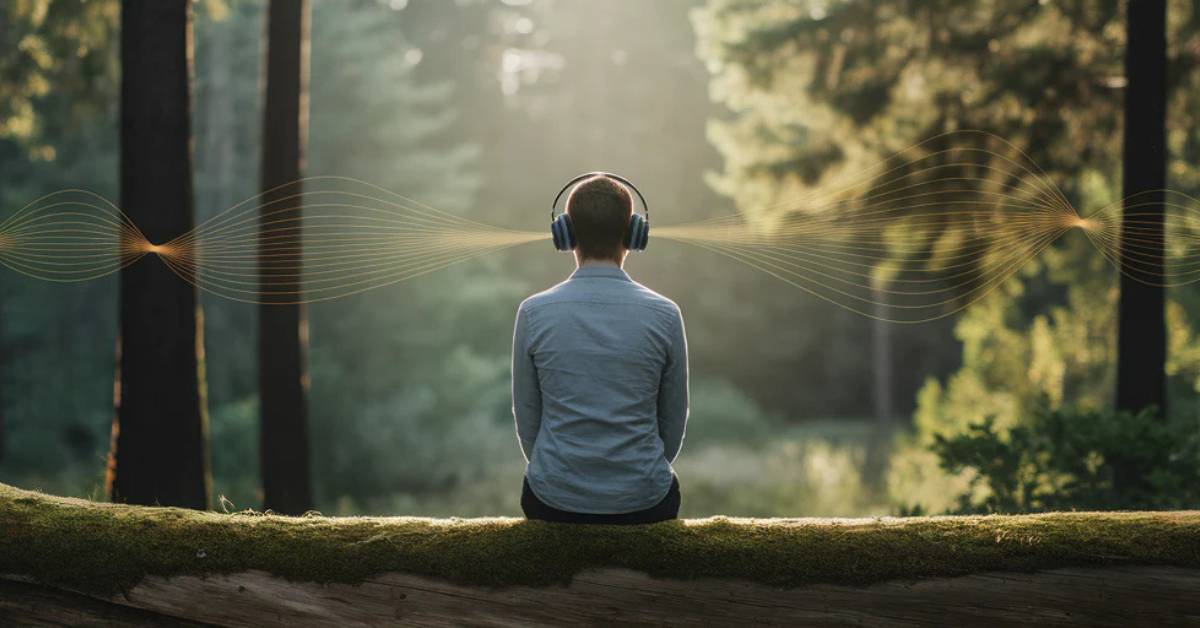
This is where things get wonderfully weird. Binaural beats work by playing a slightly different frequency in each ear through headphones. Your brain, in its cleverness, perceives a third, phantom beat at the mathematical difference between the two. This isn't a sound that actually exists in the room, but one your brain creates. Listening to beats in the theta wave range is a popular choice for encouraging binaural beats for relaxation and a state of deep, dreamy calm.
Popular Pitches: 432 Hz and 528 Hz
Certain frequencies have gained a reputation for their unique qualities. The 432 Hz frequency is often described as having an earthy, organic feel that aligns with the patterns of nature. Many find the 432 hz music benefits include a sense of groundedness and physical ease. Then there’s 528 Hz, sometimes called the “love frequency.” It’s associated with positive transformation and is believed to help reduce the biochemical markers of stress.
Ancient Tools: Solfeggio Frequencies and Singing Bowls
The ancient Solfeggio scale is like a sonic toolkit for emotional housekeeping. Each tone is thought to correspond with a specific aspect of our well-being, offering a way to address everything from lingering guilt to creative blocks. The benefits of solfeggio frequencies are tied to their purported ability to help balance our energy centers. For a deeper look into this system, you can explore our guide to the seven chakras.
- 396 Hz: Often used with the intention of releasing guilt and fear.
- 639 Hz: Associated with connection and harmonizing relationships.
- 963 Hz: Connected to a sense of oneness and spiritual awakening.
And of course, we have Tibetan singing bowls. These beautiful, physical instruments have been used for centuries to create rich, resonant vibrations that you can feel as much as you can hear, grounding the practice in ancient tradition.
The Science Behind the Serenity
While the experience of listening to these sounds can feel magical, there’s some fascinating science that helps explain what’s happening. The concept of brainwave entrainment isn't just a theory; it describes the brain's observable tendency to synchronize its own electrical patterns with the rhythm of an external stimulus, like a steady beat or a specific tone.
This synchronization can have tangible effects on your body. When your brainwaves shift into calmer states, like alpha or theta, it can signal your nervous system to move from its "fight-or-flight" mode into a "rest-and-digest" state. This is where the real magic happens. Your heart rate may slow, your breathing can deepen, and your body might reduce its production of the stress hormone cortisol. This makes using sound frequencies for anxiety a gentle yet effective approach for many.
Emerging research is beginning to support these ancient practices. As research from Healthline explains, studies have linked binaural beats in the theta range to reduced anxiety and those in the alpha range to enhanced relaxation. Other small studies suggest that listening to 528 Hz music can lower stress indicators in the endocrine system. While the field is still growing, it’s exciting to see modern science validating what mystics and healers have known for centuries. This intersection of technology and wellness is also being explored by innovative institutions like ICON Medicine, which are at the forefront of tech-backed health research.
How to Build Your Perfect Peace Playlist

Ready to become your own sound-healing DJ? It’s simpler than you think. The goal is to create a meditation playlist that feels personally supportive and enjoyable. Here’s a simple framework to get you started:
- Set an intention. What do you want to feel? Focused for a work project? Calm before sleep? Emotionally lighter? Naming your goal helps you choose the right tool.
- Choose your core frequency. Based on your intention, pick a sound from the "menu" we explored earlier. This will be the foundation of your playlist.
- Layer with textures you love. You don’t have to listen to a pure tone. Feel free to layer it with ambient sounds like gentle rain, a crackling fire, or soft instrumental music. The key is that you enjoy it.
For the best experience, use stereo headphones, especially for binaural beats, so your brain can perceive the effect correctly. Try to create a consistent practice, even if it’s just for 15 minutes a day. And remember to keep the volume moderate. The goal is tranquility, not a rock concert in your head. If you prefer a more guided experience, you can always explore one of our guided meditation journeys.
| If You Want to Feel... | Try This Sound/Frequency | A Gentle Tip |
|---|---|---|
| Deeply Relaxed & Sleepy | Theta Waves (4-8 Hz) or 432 Hz Music | Best listened to while lying down before bed. |
| Calm but Alert (for work/study) | Alpha Waves (8-13 Hz) | Great for background focus without being distracting. |
| Creative & Inspired | Binaural Beats in the Theta range | Use during brainstorming or creative activities. |
| Emotionally Lighter | Solfeggio Frequency 396 Hz | Listen with the intention of letting go of heavy feelings. |
Note: These are common associations. Your personal experience is the most important guide, so feel free to experiment.
Keeping an Open and Realistic Mind
As we wrap up our sonic journey, it’s important to keep a balanced perspective. Much of the research into sound frequencies is still in its early stages, often relying on small studies or self-reported feelings. This doesn’t invalidate the practice; it just means we’re at the beginning of an exciting new frontier in wellness.
The most important thing to remember is that this is a deeply personal experience. One person’s bliss frequency might be another’s minor annoyance. Your nervous system is the ultimate authority here. Approach this with a sense of playful curiosity. If a certain sound doesn’t resonate, simply try another. There’s no right or wrong way to do it.
Looking ahead, the integration of sound therapy with wearable technology is becoming more common. For instance, the Oura Ring blog already discusses the benefits of Solfeggio frequencies, showing how mainstream wellness tech is embracing these tools. Soon, we may get real-time feedback on how specific sounds affect our sleep, heart rate, and stress levels. For now, consider music meditation a beautiful, personalized tool for your well-being, and feel free to explore all the resources we have at Feed Your Spirit to support your path.